


 Login/Register


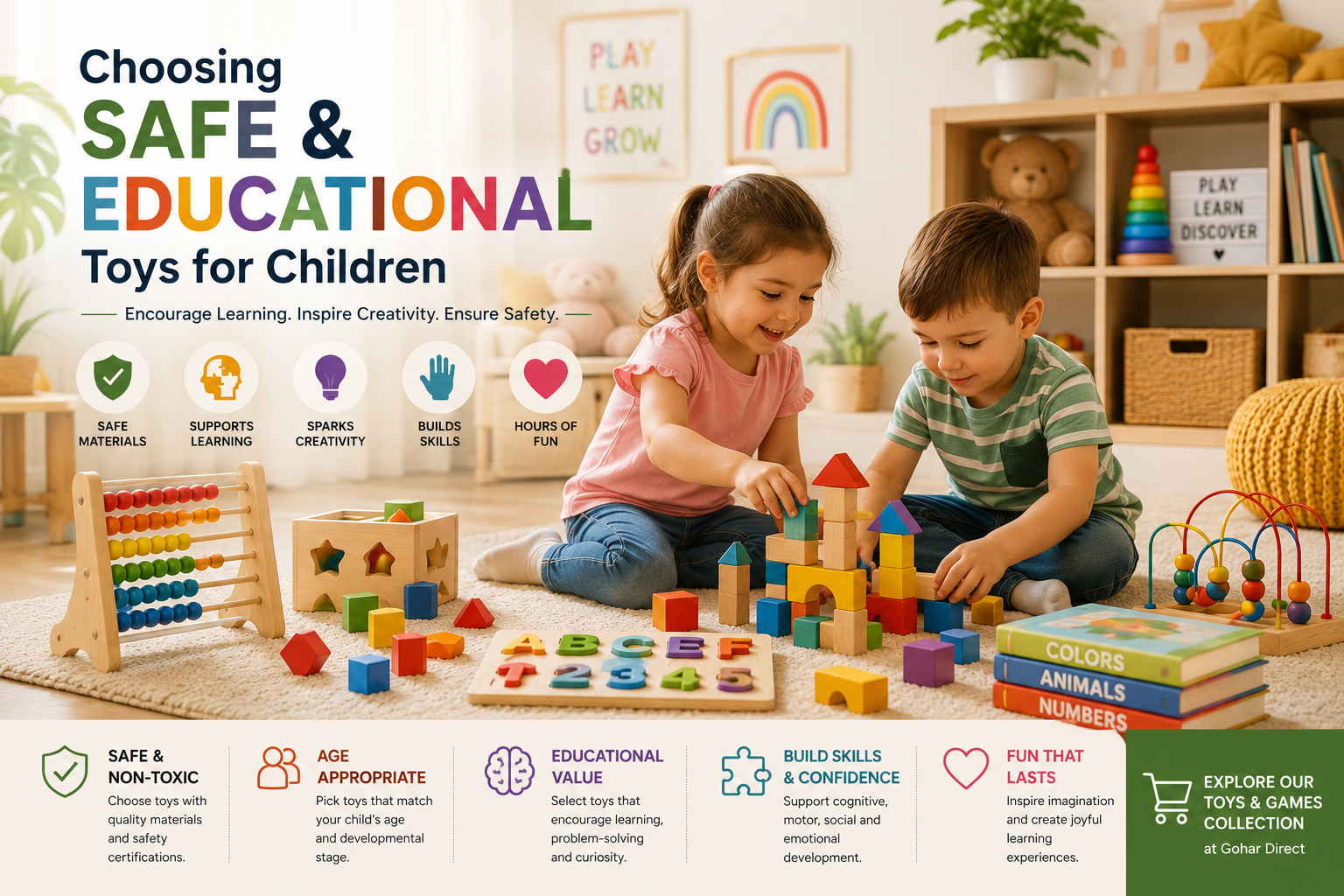
Choosing Safe and Educational Toys for Children
Choosing the right toys is about more than keeping children entertained. Well-designed toys can encourage creativity, develop motor and problem-solving skills, and provide safe, engaging play experiences.
With so many toys available, choosing the right option can sometimes feel overwhelming. This guide covers the key things parents and carers should consider when selecting toys that are safe, age-appropriate, educational, and enjoyable.
1. Choose Age-Appropriate Toys
Always check the manufacturer’s recommended age range before buying a toy. Age recommendations are designed to help ensure that the toy is suitable for a child’s developmental stage and abilities.
Consider the child’s age, interests, and individual skills rather than choosing a toy based only on its appearance.
2. Look for Safety Certifications
Safety should always be a priority when buying children’s toys. Look for products that comply with applicable UK toy safety requirements and include clear safety and usage information.
Check the packaging for relevant safety markings, age recommendations, and manufacturer information before purchasing.
3. Encourage Learning Through Play
Educational toys can make learning enjoyable by encouraging children to explore and experiment.
Depending on the toy, play can help develop:
- Language and communication
- Early maths skills
- Problem-solving
- Memory
- Coordination
- Critical thinking
- Creativity
The best educational toys make children want to play while naturally supporting learning.
4. Select Durable Materials
Children’s toys can receive plenty of use, so choose products that are well-made and designed for regular play.
Durable materials can help toys last longer and reduce the need for frequent replacements. Check that pieces are securely constructed and suitable for the intended age group.
5. Avoid Small Parts for Young Children
Small detachable pieces can present a choking risk for young children. Always follow the manufacturer’s age recommendations and safety warnings.
For younger children, choose toys with appropriately sized components and avoid products containing small parts that can easily be detached.
6. Promote Creative Play
Toys that encourage children to create, build, imagine, and experiment can support creative development.
Building blocks, arts and crafts, puzzles, pretend-play sets, and role-play toys can give children opportunities to use their imagination and develop their own ideas.
7. Encourage Outdoor Activity
Outdoor toys can encourage children to stay active while developing physical coordination and confidence.
Depending on the child’s age and available space, consider toys that encourage movement, balance, throwing, catching, or imaginative outdoor play.
Always supervise children appropriately and follow the manufacturer’s safety instructions.
8. Balance Screen Time
Electronic toys can be entertaining and educational, but they don’t need to replace traditional play.
Create a balanced play environment by combining electronic toys with books, puzzles, building activities, creative projects, board games, and hands-on toys.
A variety of play experiences can help children develop different skills.
9. Keep Toys Organised
A tidy play area is easier to use and can help reduce clutter. Use storage boxes, baskets, shelves, or dedicated toy storage to keep toys organised.
Keeping smaller toys together and storing larger toys safely can also make it easier for children and adults to find what they need.
10. Rotate Toys
Children don’t necessarily need access to every toy at the same time. Rotating toys can keep play areas less cluttered and make familiar toys feel interesting again.
Store some toys away and bring them back after a few weeks. This can create a sense of variety without constantly buying new products.
Quick Buying Checklist
Use this checklist before purchasing a children’s toy:
| Check | Done |
|---|---|
| Age appropriate | ☐ |
| Safe materials | ☐ |
| Educational value | ☐ |
| Easy to clean | ☐ |
| Durable construction | ☐ |
| Encourages creativity | ☐ |
| No inappropriate sharp edges | ☐ |
| Easy to store | ☐ |
Frequently Asked Questions
What makes a toy educational?
An educational toy encourages children to learn while they play. It may help develop skills such as problem-solving, communication, coordination, creativity, memory, or early maths.
How do I know if a toy is suitable for my child’s age?
Check the manufacturer’s recommended age range and safety information on the packaging or product listing. Also consider your child’s individual abilities and developmental stage.
Are electronic toys good for children?
Electronic toys can provide useful learning and entertainment opportunities, but they are best balanced with traditional, creative, physical, and hands-on activities.
How can I keep children’s toys organised?
Use labelled storage boxes, baskets, shelves, or dedicated toy organisers. Regularly sort through toys and remove broken or unused items to keep the play area manageable.
How often should I rotate toys?
There is no fixed schedule. You can rotate toys whenever children begin losing interest or when the play area becomes too cluttered. Every few weeks can be a practical starting point.
Conclusion
The best toys combine fun, learning, and safety. By selecting quality, age-appropriate products, parents and carers can support children’s development while giving them enjoyable and engaging play experiences.
Remember to check age recommendations, safety information, materials, durability, and educational value before making a purchase.
Find Toys for Learning & Fun
Explore the Toys & Games collection at Gohar Direct for quality toys designed to inspire learning, creativity, and family fun.
 Share
Share